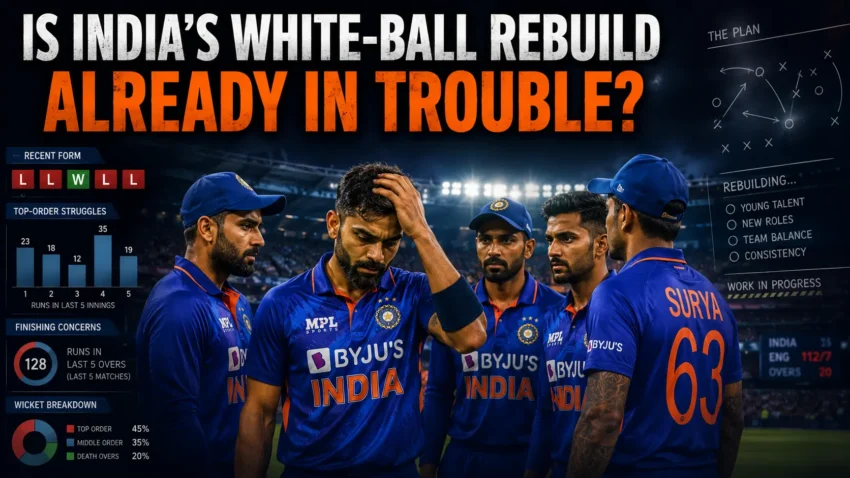
Indian cricket has entered a new phase. Following the retirement of several experienced players and a growing emphasis on preparing for future ICC tournaments, the team management has begun rebuilding India’s white-ball squad with a mix of established stars and emerging talent.
While the long-term vision is clear, recent performances have sparked debate among cricket fans and experts. Questions are being raised about team selection, batting consistency, bowling combinations, and whether the rebuilding process is moving in the right direction.
After a series of inconsistent performances, many supporters are asking a difficult question: Is India’s white-ball rebuild already under pressure?
Why Is India Rebuilding?
Every successful cricket team eventually reaches a transition period.
Several experienced players who formed the backbone of India’s white-ball success are no longer part of the regular setup. As a result, selectors have started investing in younger cricketers who could represent the country over the next decade.
The objectives of the rebuild include:
- Preparing for future ICC tournaments.
- Developing young batting talent.
- Building a balanced bowling attack.
- Creating squad depth across all formats.
- Identifying long-term match winners.
Although rebuilding is necessary, it often comes with short-term challenges.
Recent Performances Raise Questions
India has produced some impressive individual performances, but consistency has remained an issue.
Several matches have highlighted recurring problems:
- Top-order collapses.
- Lack of partnerships.
- Poor finishing in crucial moments.
- Inconsistent bowling during the death overs.
- Missed fielding opportunities.
Against strong opponents, these small mistakes have often proved costly.
Supporters understand that rebuilding takes time, but they also expect visible progress from one series to the next.
Batting Concerns Continue
India has traditionally relied on a strong batting lineup. However, recent matches have exposed vulnerabilities.
Top Order
The opening partnership has struggled to provide consistent starts. Early wickets have repeatedly placed pressure on the middle order.
Middle Order
Although talented, the middle-order batters have not always converted starts into match-winning innings. Building longer partnerships remains an area for improvement.
Finishing Role
Modern T20 and ODI cricket often depends on explosive finishing. India continues searching for the ideal combination capable of consistently scoring quick runs in the final overs.
Are Too Many Changes Affecting Stability?
One of the biggest discussions among cricket analysts is the frequent rotation of players. Giving opportunities to young cricketers is important, but constant changes can also create uncertainty.
Players often perform better when they understand their roles clearly.
Frequent adjustments may affect:
- Team chemistry.
- Player confidence.
- Batting positions.
- Bowling combinations.
- Tactical planning.
Finding the right balance between experimentation and stability will be essential.
Leadership During the Transition
Leadership becomes even more important during rebuilding phases.
The captain and coaching staff are responsible for:
- Building confidence.
- Supporting young players.
- Making tactical decisions.
- Managing pressure.
- Maintaining team morale.
India’s leadership group has shown faith in emerging players, but consistent performances will ultimately determine the success of the rebuild.
Young Players Showing Promise
Despite the challenges, there are several positive signs.
1) Young cricketers have demonstrated impressive talent and fearlessness.
2) Some emerging players have already produced memorable performances and shown they can compete at the highest level.
3) Their willingness to attack bowlers and play modern white-ball cricket provides optimism for the future.
However, turning potential into consistency remains the next step
Bowling Still Has Plenty of Strength
India’s bowling attack continues to be one of the team’s biggest assets.
Fast bowlers have regularly provided early breakthroughs, while the spin department offers valuable control during the middle overs.
Key strengths include:
- Quality pace attack.
- Experienced spin options.
- Variety in bowling styles.
- Ability to take wickets during powerplays.
Improving execution during the death overs could significantly strengthen the team’s overall performances.
Fielding Must Improve
Modern cricket is often decided by small margins.
Dropped catches, misfields, and missed run-out opportunities can completely change a match.
India has shown excellent athleticism in recent years, but maintaining consistently high fielding standards will be crucial during the rebuilding process.
Saving even 10 to 15 runs in a match can make a significant difference.
Pressure From Fans and Media
Few cricket teams face expectations as high as India.
Every defeat generates discussion across television, newspapers, and social media.
Young players entering the national team must learn to manage:
- Public criticism.
- Media attention.
- High expectations.
- Performance pressure.
Supporting these players while allowing them time to develop is essential for long-term success.
Upcoming Challenges
India’s rebuilding process will be tested further in upcoming international series.
Strong opposition will provide valuable opportunities to evaluate:
- Squad depth.
- Leadership.
- Batting combinations.
- Bowling consistency.
- Team balance.
These matches will help selectors identify which players can become long-term members of the national side.
What Needs to Improve?
Several areas require attention if India wants to accelerate its rebuilding process.
Consistent Opening Partnerships
Strong starts reduce pressure on the middle order.
Defined Player Roles
Every player should clearly understand their responsibilities.
Better Death Bowling
Containing runs during the final overs remains a priority.
Finishing Ability
Scoring rapidly in the final five overs is becoming increasingly important in modern white-ball cricket.
Improved Fielding
Reducing simple mistakes can directly influence match results.
Reasons for Optimism
Although criticism has increased following recent defeats, there are many reasons for optimism.
India possesses:
- One of the world’s largest talent pools.
- Excellent domestic competitions.
- Strong coaching infrastructure.
- Emerging young stars.
- Experienced senior players capable of mentoring the next generation.
History shows that successful rebuilding projects require patience.
Many world-class teams have experienced temporary setbacks before becoming dominant again.
Can India Bounce Back?
Absolutely.
Indian cricket has repeatedly demonstrated its ability to recover from difficult periods.
The current rebuilding phase is an investment in the future rather than a short-term solution.
If young players continue gaining experience and the team management maintains a clear long-term vision, India has every opportunity to become one of the strongest white-ball teams once again.
Patience, consistency, and smart selection decisions will be the key ingredients.
Frequently Asked Questions
Why is India rebuilding its white-ball team?
The rebuild aims to prepare a competitive squad for future ICC tournaments while giving opportunities to promising young players.
What are India’s biggest challenges?
Batting consistency, finishing games, player stability, and death-over bowling are among the main challenges.
Are young players performing well?
Several young cricketers have shown impressive potential, but greater consistency is needed at the international level.
Can India become a strong white-ball team again?
Yes. India has excellent domestic talent, experienced leadership, and a strong cricketing system to support long-term success.